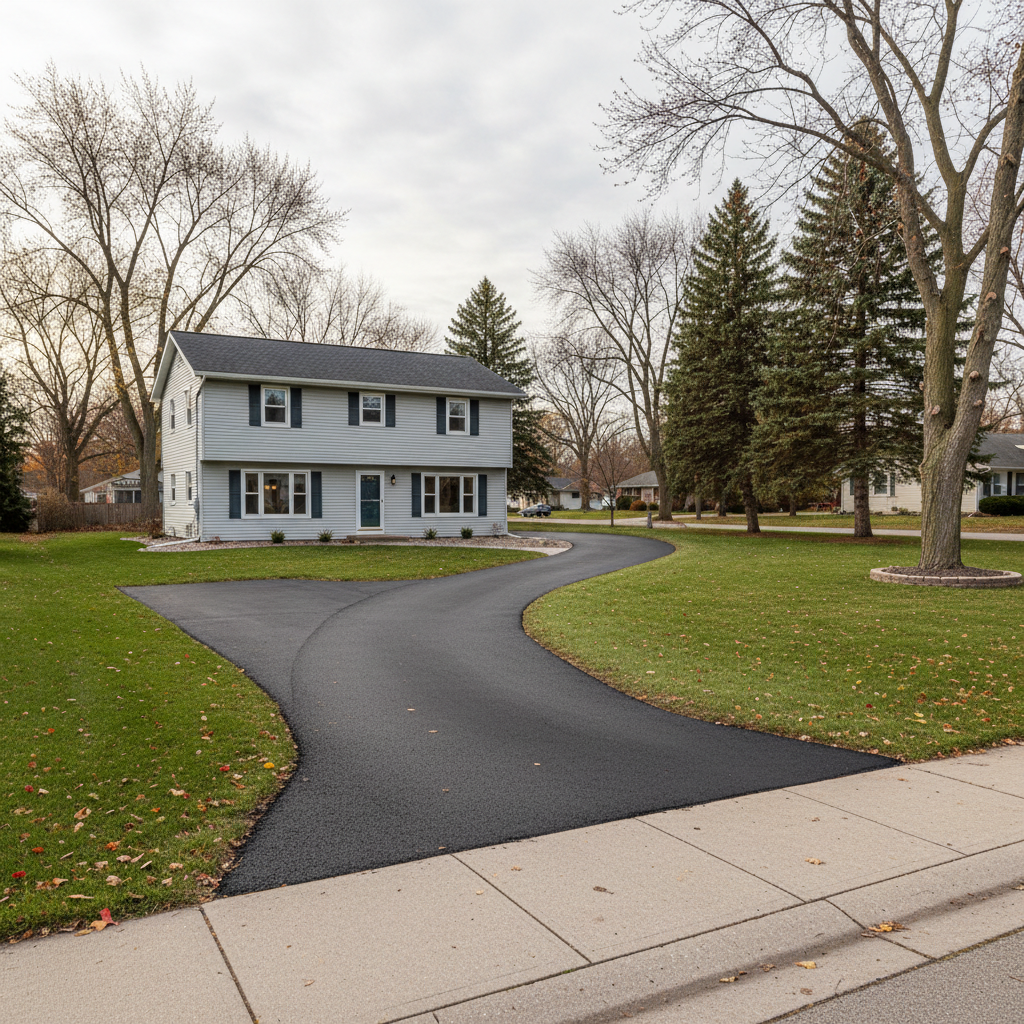
So, you're finally ready to deal with that cracked, crumbling driveway and get some fresh asphalt down. Good for you! A new driveway isn't just about making your house look better; it's a real investment in your home. Before you jump in, though, there's some planning you'll want to do. I'm going to walk you through what I tell my neighbors right here in Lansing about getting their residential asphalt project done right.
When's the Best Time for a New Driveway?
This is probably the first question I get. For asphalt paving, timing is pretty important. You don't want it too cold, and you definitely don't want it too hot. Here in Michigan, that means our best season usually runs from late spring, all through summer, and into early fall. Think May through October, generally. We need steady temperatures above 50 degrees Fahrenheit, both day and night, so the asphalt can cure correctly. If it's too cold, the asphalt cools too fast, making it harder to compact properly. If it's too hot, it can be too soft and cause problems. Plus, we need dry conditions. Paving on wet ground or during a downpour is just asking for trouble down the road, isn't it? So, while you might get a quote in the dead of winter, the actual work won't happen until the weather cooperates.
What Happens During the Paving Process?
Okay, so you've picked a contractor (hopefully Valley Asphalt Inc!), and the weather's looking good. What's actually going to happen on your property? Here's the rundown:
- Excavation and Grading: First, we'll take out your old driveway, if you have one. Then, we'll dig out the area to the right depth. This is where good drainage starts. We'll make sure the grade slopes away from your house, which is especially important if your property has some of that heavy clay soil we often see around the Old Town area.
- Base Layer Installation: This step is super important. We'll put down a solid aggregate base, usually crushed limestone or gravel. This base gives stability and helps with drainage. We'll compact it thoroughly. Don't skimp on the base; it's the foundation of your new driveway, after all.
- Asphalt Application: Once the base is ready, we bring in the hot asphalt mix. A paving machine usually spreads it evenly, and then heavy rollers compact it. This is when it really starts to look like a driveway.
- Compaction: We'll run those rollers over it multiple times to get the right density and smoothness. This is what makes your driveway durable and long-lasting.
- Cooling and Curing: The asphalt needs time to cool and cure. You won't be able to drive on it right away. We'll give you specific instructions on when it's safe to use.
How to Prepare Your Property
You've got a role to play too! Here's what you can do to make things go smoothly:
- Clear the Area: Move any vehicles, boats, trailers, or anything else off the driveway and out of the work zone. This includes potted plants, garden hoses, and decorations.
- Trim Landscaping: If you have bushes, trees, or overhanging branches close to the driveway, give them a trim. This protects your plants and gives our equipment room to work.
- Mark Utilities: If you have any invisible dog fences, sprinkler lines, or other buried utilities that Miss Dig hasn't marked, let us know and mark them yourself. We definitely don't want to accidentally cut them.
- Plan for Access: Remember, you won't be able to use your driveway for a few days after paving. Plan where you'll park your cars and how you'll get in and out of your house.
- Communicate: If you have any specific concerns or questions before we start, talk to us. We're here to help.
Questions to Ask Before You Sign
Before you commit to a contractor, you need to be asking the right questions. This isn't just about price; it's about getting good work done.
- What's included in the quote? Make sure it clearly outlines excavation, base material, asphalt thickness, and any grading work. Are permits included?
- What kind of base material do you use, and how thick will it be? A good base is critical. I recommend at least 6-8 inches of compacted aggregate for residential driveways.
- What's the asphalt mix design and thickness? For residential, you'll typically want 2-3 inches of compacted asphalt on top of that base.
- How long have you been in business in Lansing? Experience really matters, especially with local soil conditions and weather.
- Can you provide references? Talk to their past customers. See their work.
- Are you licensed and insured? This is non-negotiable. Ask for proof of both. You don't want to be liable if something goes wrong.
- What's your warranty? A good contractor will stand behind their work. Understand what's covered and for how long.
- What's the payment schedule? Be wary of contractors who demand a huge upfront payment. A reasonable deposit is fine, but most of the payment should be due when the job is done to your satisfaction.
- How long will the project take, and when can I drive on it? Get clear expectations.
Getting a new driveway is a big project, but with good planning and the right contractor, you'll have a smooth, durable surface that adds value to your home for years to come. Don't rush into it; do your homework, ask tough questions, and you'll be glad you did.