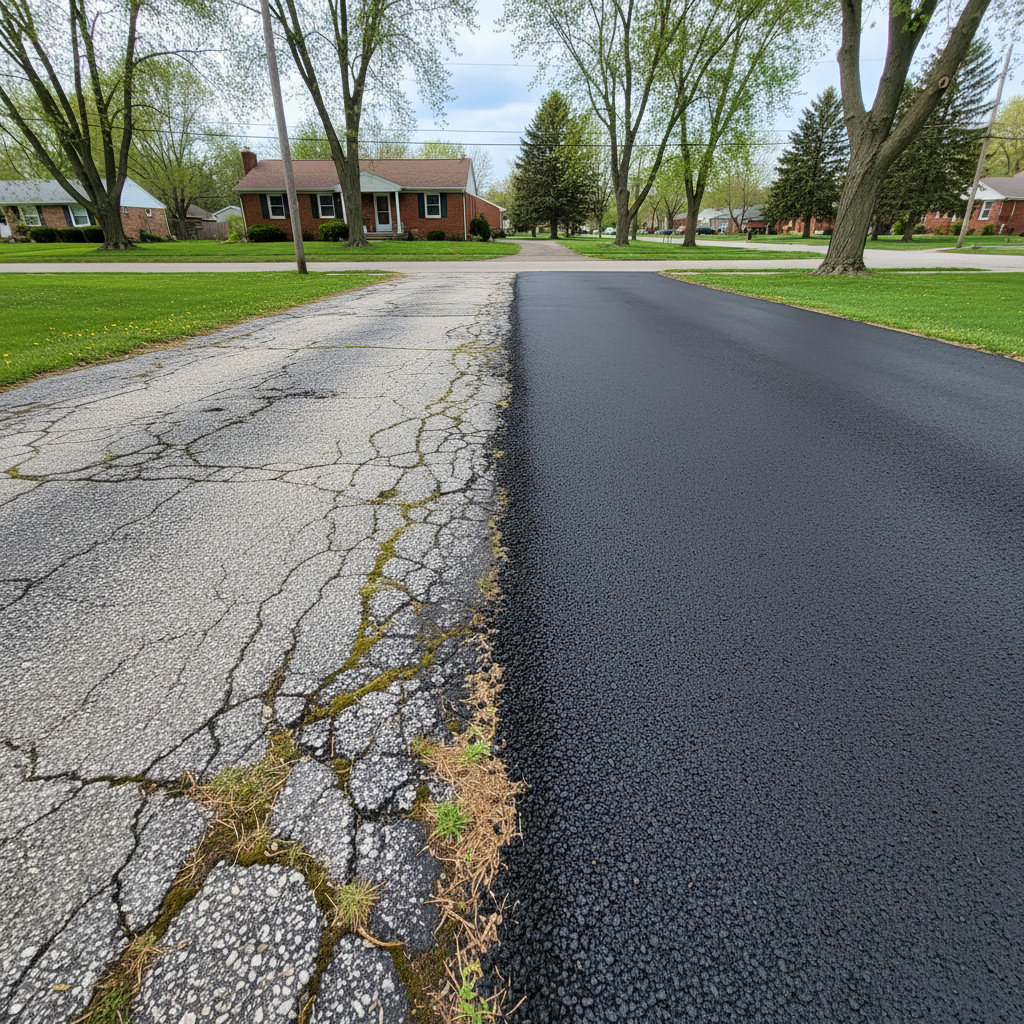
So your driveway's seen better days, huh? Cracks are spreading, maybe a pothole or two has popped up. It happens, especially with the kind of winters we get here in Lansing. When it's time to fix those spots, you're generally looking at two main options for patching: a surface patch or a cut-and-fill repair. Let's talk about what each one means for your wallet, how long it'll last, and what it'll look like.
Surface Patching: The Quick Fix
A surface patch, sometimes called an overlay or skin patch, is exactly what it sounds like. We clean out the loose stuff from the pothole or crack, maybe put down a tack coat to help the new asphalt stick, and then we lay a fresh layer of hot asphalt right over the top of the damaged area. We compact it down, and you're good to go. It's the faster, cheaper option upfront, no doubt about it.
- Cost: Definitely the most budget-friendly choice initially. Less labor, less material, less time.
- Durability: This is where you start to see the trade-offs. A surface patch isn't designed for long-term structural integrity. It's a band-aid. It'll fix the immediate problem, but because it's just sitting on top of an already compromised base, it's more susceptible to failing again. Those freeze-thaw cycles we deal with in Michigan? They're brutal on these kinds of patches. Water can still get underneath, freeze, expand, and lift that patch right up.
- Maintenance: You might find yourself patching the same spot again in a few years, or even sooner if the underlying problem is severe.
- Appearance: It's not going to be seamless. You'll see the outline of the patch, and it might sit a little higher or lower than the surrounding pavement. It's functional, not pretty.
Cut-and-Fill Repair: Doing It Right
Now, a cut-and-fill repair is the more involved, but ultimately more effective, method. With this approach, we don't just cover up the problem. We cut out the entire damaged section of asphalt, often going down to the gravel base. We remove all the bad material, make sure the base is solid and properly drained, and then we lay new hot asphalt in layers, compacting each one until it's flush with the surrounding pavement. This is how Valley Asphalt Inc prefers to do things when we're aiming for a lasting repair.
- Cost: It's going to cost more upfront than a surface patch. There's more labor involved, more material removed and replaced.
- Durability: This is where cut-and-fill shines. By removing the compromised asphalt and addressing the base, you're getting a repair that's designed to last. It integrates much better with your existing driveway and stands up way better to our harsh Lansing weather. You're less likely to see that same spot fail again for a long, long time.
- Maintenance: Much lower long-term maintenance. You're fixing the problem, not just masking it.
- Appearance: A well-done cut-and-fill patch is far more aesthetically pleasing. It's flush, smooth, and blends in much better with the rest of your driveway. It won't look like an afterthought.
Which One Should You Choose?
Look, if you're selling your house next week and just need a quick fix to pass inspection, a surface patch might do the trick. But for most homeowners in Lansing, especially if you plan on staying in your home for a while, I'm always going to recommend a cut-and-fill repair. It's the proper way to do it. You're investing a bit more upfront, but you're saving yourself headaches, repeat repairs, and an unsightly driveway down the road.
Our clay soils here in Mid-Michigan can be tricky, and proper drainage and a solid base are crucial for any asphalt work to last. A surface patch just doesn't account for those underlying issues. You want a repair that can handle the heavy snowmelt and the constant freeze-thaw cycles without falling apart. A cut-and-fill repair gives you that peace of mind. It's the difference between putting a bandage on a deep wound and actually stitching it up properly.